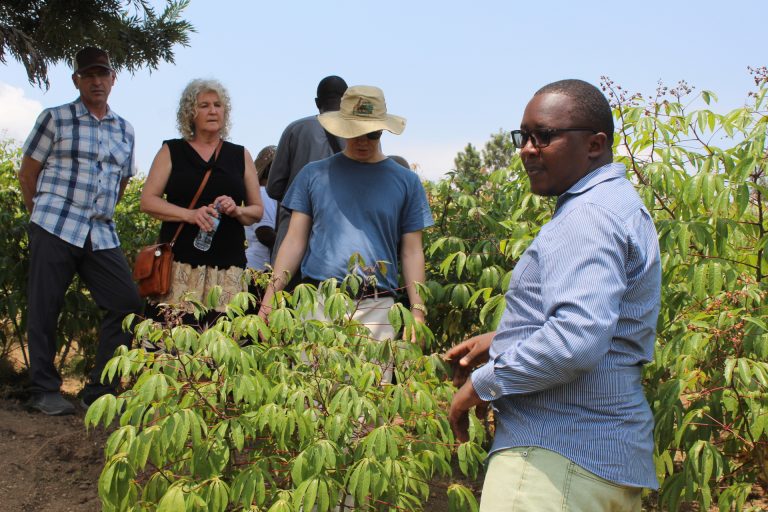
In early 2025, a delegation of farmers and donors from Saskatchewan, Canada, embarked on a journey to Rwanda with a shared purpose: to witness the impact of conservation agriculture and learn from the remarkable work being carried out by the PDN. This trip, organized during Rwanda’s harvesting season in February, was an opportunity for the group comprising seasoned farmers from Grow Hope Saskatchewan and donors who supported agricultural initiatives worldwide to gain firsthand insight into sustainable farming practices that were reshaping the lives of local farmers. Rwanda, a small but vibrant East African nation, is known for its lush landscapes and rapidly advancing agricultural sector. The PDN program stands out for its commitment to conservation agriculture, which focuses on enhancing soil health, increasing crop yields, and improving the resilience of farming communities. Upon arrival in Kigali, the delegation was warmly welcomed by PDN representatives who were eager to share their knowledge and experiences. The group’s journey then took them to a rural village in the southern province of Ruhango, where PDN had been implementing conservation agriculture practices for several years.
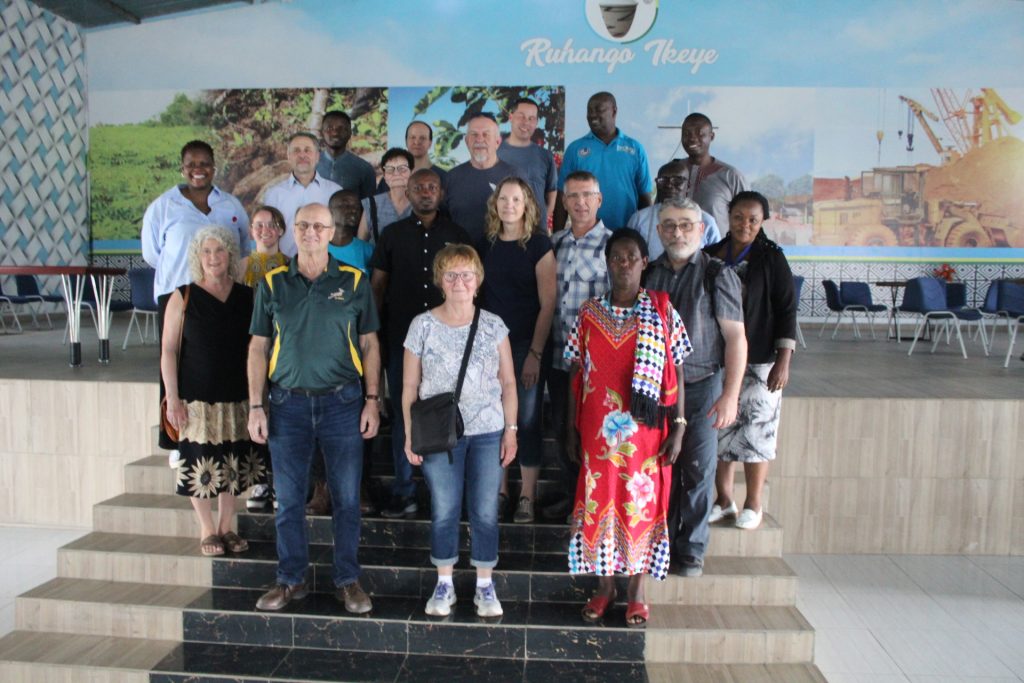
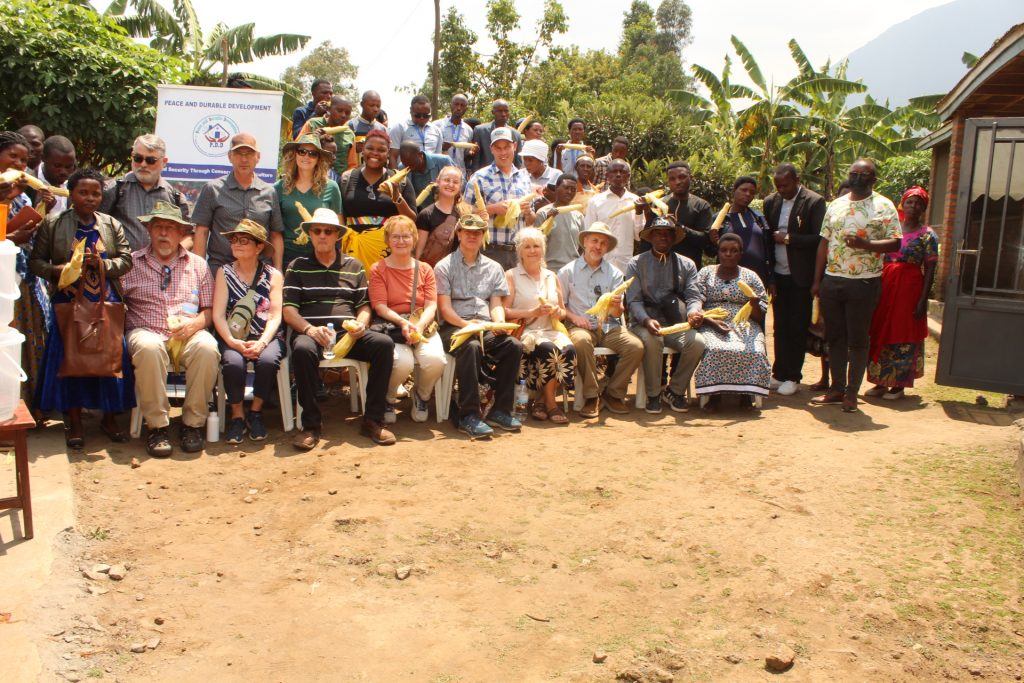
Saskatchewan team having photos with Ruhango vice Mayor and group photo at Burera district
As the group arrived in Ruhango, they were greeted by local farmers who had been practicing conservation agriculture under the guidance of PDN. The farmers, many of whom had experienced significant improvements in their livelihoods, shared their stories and invited the visitors to explore their fields. In this small village, nestled on the side of a hill, the Canadian farmers saw firsthand the transformative effects of practices such as minimum tillage, mulching, and crop rotation. These methods are designed not only to protect the soil but also to enhance water retention, particularly in an area that has long been prone to droughts like the sand soils of Ruhango sector. The visitors were struck by the vibrant greenery of the fields, a stark contrast to the eroded landscapes they had encountered earlier in their travels. PDN’s representatives explained that by reducing tillage and planting cover crops, local farmers had successfully preserved the integrity of their soils while improving fertility. Cover crops help to restore essential nutrients to the land and mitigate the effects of both wind and water erosion. As the group toured the fields, they had the privilege of speaking with local farmers who had embraced these conservation practices. One particularly moving account came from Beatrice, a middle-aged farmer whose yields had improved dramatically since adopting conservation agriculture. Beatrice shared how her family, once struggling to make ends meet, was now able to grow enough food not only to sustain themselves but also to sell surplus crops at the local market.
“Before, we had to depend on the rain,” Beatrice explained through a translator. “But now, we use water more wisely and rely on the soil. We have food for our families and enough to sell. Life is much better.”
For the Saskatchewan farmers, these testimonies were eye-opening. They quickly realized that conservation agriculture was not only environmentally sustainable but also economically viable. The local farmers, many of whom had limited resources, were able to take control of their agricultural practices, providing for their families and contributing to the local economy.
One of the most impactful aspects of the PDN initiative was its focus on community empowerment. During the visit, the group learned about the Farmer Field Schools (FFS) that had been established in Ruhango. These schools brought together farmers particularly women who shared knowledge, resources, and support for one another. This spirit of collaboration was palpable, with the farmers discussing both their successes and challenges in a supportive, non-competitive environment.
Uwineza Delphine, a field staff member, explained the significance of their work in fostering long-term sustainability: “What we’re doing here is more than just farming. We’re protecting the land, improving our incomes, and taking care of our future generations.” The donors were especially moved by the sense of community that had flourished within the FFS. The women demonstrated a powerful commitment to mutual support, which had resulted in both improved agricultural practices and strengthened community bonds.
For the Saskatchewan delegation, the lessons learned in Rwanda led to deep reflections on their own farming practices. Many of them worked on large-scale, industrial farms, focused primarily on maximizing yields. The contrast with the small-scale, sustainable methods observed in Rwanda was striking. The Saskatchewan farmers recognized that, while efficiency was important, there was a growing need to incorporate sustainability into their farming practices. The farmers from Saskatchewan were not just learning about new agricultural techniques; they were gaining a broader perspective on the relationship between farming and the environment. They left Rwanda inspired by the innovative, community-driven solutions that were addressing pressing global challenges such as climate change, food insecurity, and poverty.
For the donors, the visit underscored the importance of continued support for initiatives like PDN. They saw firsthand the significant impact their contributions had made, and understood that by investing in sustainable agricultural practices, they could help farmers in Rwanda and around the world build resilient livelihoods. The trip from Rwanda was not just about learning new farming techniques; it was about forging global connections rooted in the shared values of sustainability, community, and resilience. These values, the delegation realized, transcend borders and can be applied to farming anywhere, from the hills of Rwanda to the prairies of Saskatchewan. As they boarded the plane back to Canada, the farmers and donors knew that their journey had only just begun. They would return home not only with new knowledge but with a renewed commitment to farming in harmony with the land, for the benefit of future generations.