Rwanda is a land-locked, predominantly hilly country in Central Africa of 26,338 square kilometers, bordered by the Democratic Republic of Congo, Burundi, Tanzania, and Uganda. Approximately 60% of the total land area is used for agriculture. As of 2020, Agriculture contributed to 26% of the country’s GDP despite it having decreased by 3.4% following an increase of 9.5% in 2019, and this was mainly due to COVID-19.
PDN is currently operating in 5 districts (Burera, Gicumbi, Kayonza, Bugesera, and Ruhango) and plans to scale up its interventions within the five districts (see map to the left). Although food security levels vary among each district, they all demonstrate a need for improved food security. The national average for food insecurity is 18.7% of households, using data from the Comprehensive Food Security & Vulnerability Analysis (CFSVA) 2018. Kayonza is the most food insecure at 32.5%, followed by Burera (29.7%), Ruhango (17.7%) and Gicumbi (17.3%). Six years ago, Bugesera had a food insecurity level of 29%, which has reduced to 8.9%, probably due to the increased urbanization of one of its towns neighboring Kigali. However, Bugesera also contains some of the worst hit sectors in the country, such as Mwogo and Juru in terms of climate change that has led to decreased levels of rainfall and prolonged dry spells. PDN desires to work with the smallholder farmers in these sectors to improve their food security by giving them the knowledge, skills and tools they need to be more resilient.
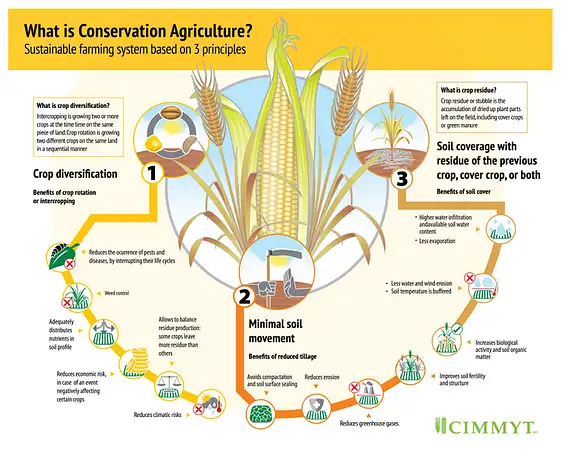
PDN operates according to the theory of change that: if farmers apply CA+ techniques (CA techniques and Good Agronomic Practices) with access to VLSA’s (i.e., access to capital) then food security (availability of food, accessibility to food, utilization of food, and resilience to shocks) will increase.
Moreover, farmers are more likely to apply CA+ techniques in an environment where stakeholders (government, farmers, NGO’s, etc.) are informed on CA’s potential to address food security issues, support one another through networking opportunities and operate under policy that favors CA (see logic model to the left).
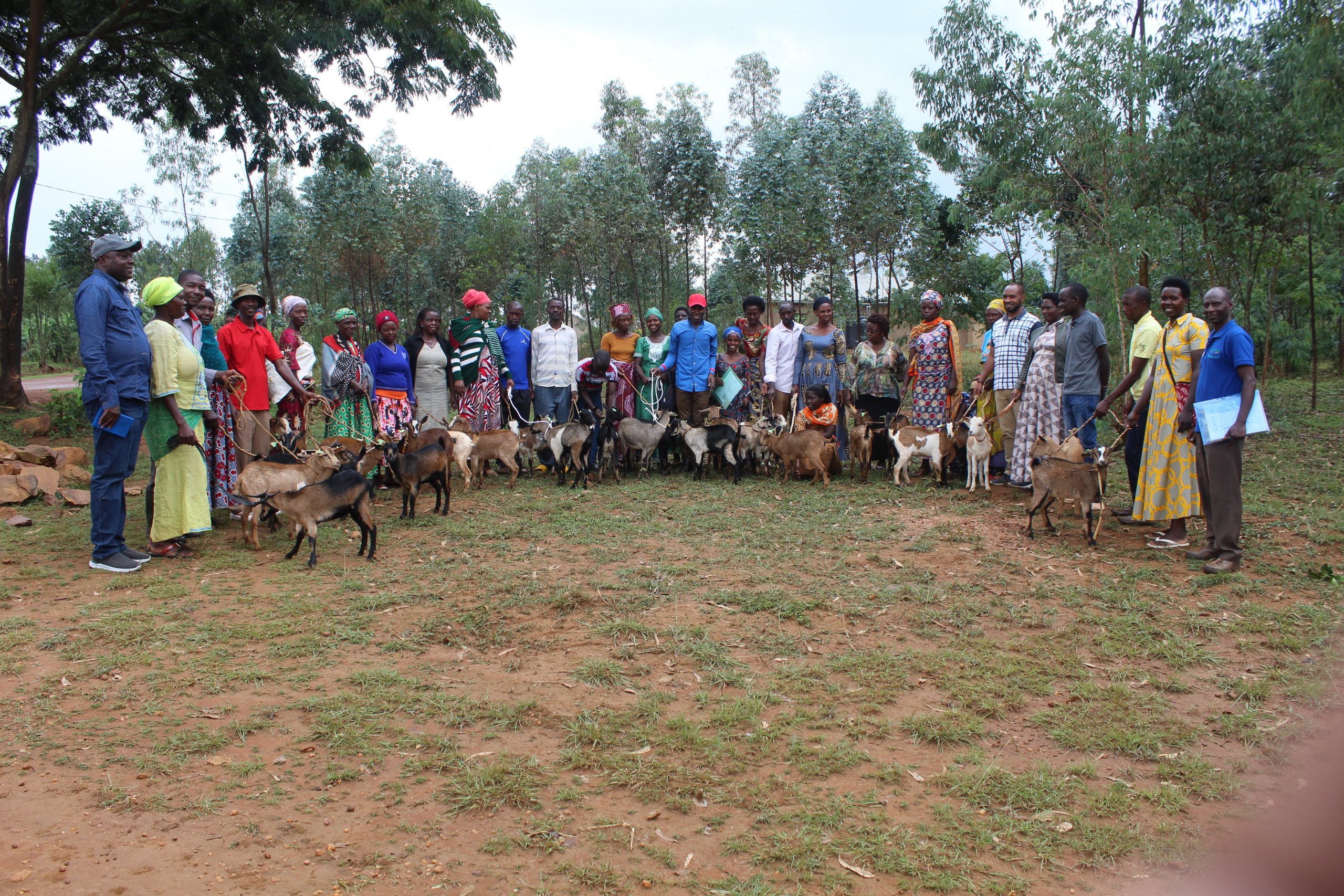
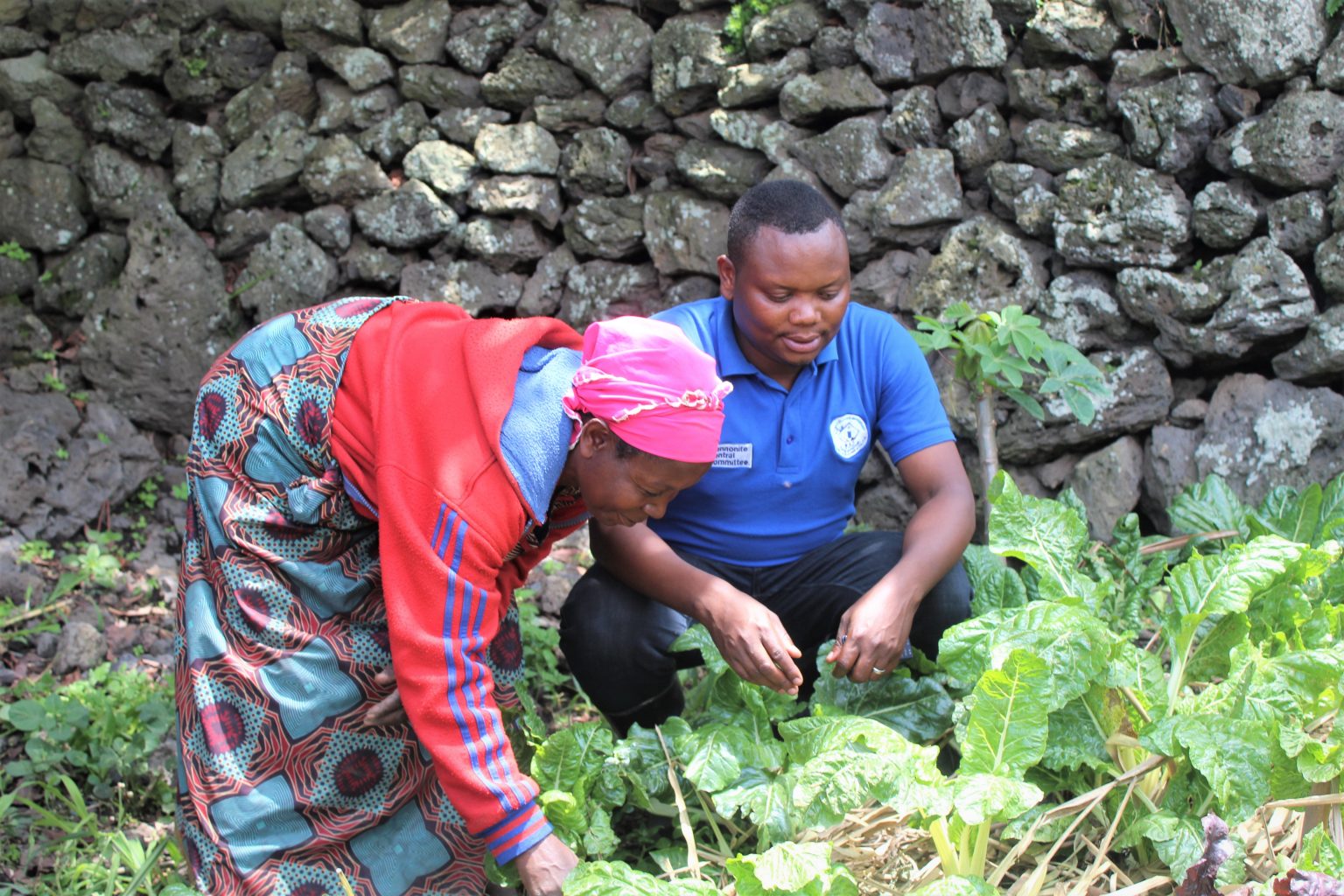
The activities emerging from this theory of change include capacity building for farmers on CA + good agronomic practices, nutrition, gender, post-harvest handling and storage; establishment of study plots; study tours; distribution of small livestock, establishment of kitchen gardens; creation of Village Saving and Loans Associations (VSLAs); promotion of cooperative creation; and advocacy, networking, and partnerships. For food availability and access, existing yield gaps need to be substantially reduced. This can be achieved by the application of CA and GAPs to improve production per unit area of land, maximizing productivity in the relatively small smallholder farmers’ plots. This can also help combat the effects of climate change in the case of prolonged dry spells. Training farmers on nutrition and kitchen garden establishment will increase access to a more diverse source of nutrients as we aim towards improved utilisation amongst the participants, while knowledge and skills on post-harvest handling and storage will address stability issues. VSLAs will also serve to address poverty, thereby improving access, utilisation and stability while improving access to credit for inputs and seed.
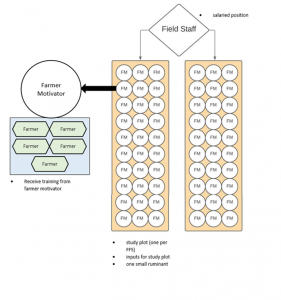
All training is conducted through a decentralized farmer field school (FFS) model. There are two FFS of thirty members (Farmer Motivators) per district and each Farmer Motivator will select five other smallholder farmers to teach from their community (see FFS/extension model to the left).