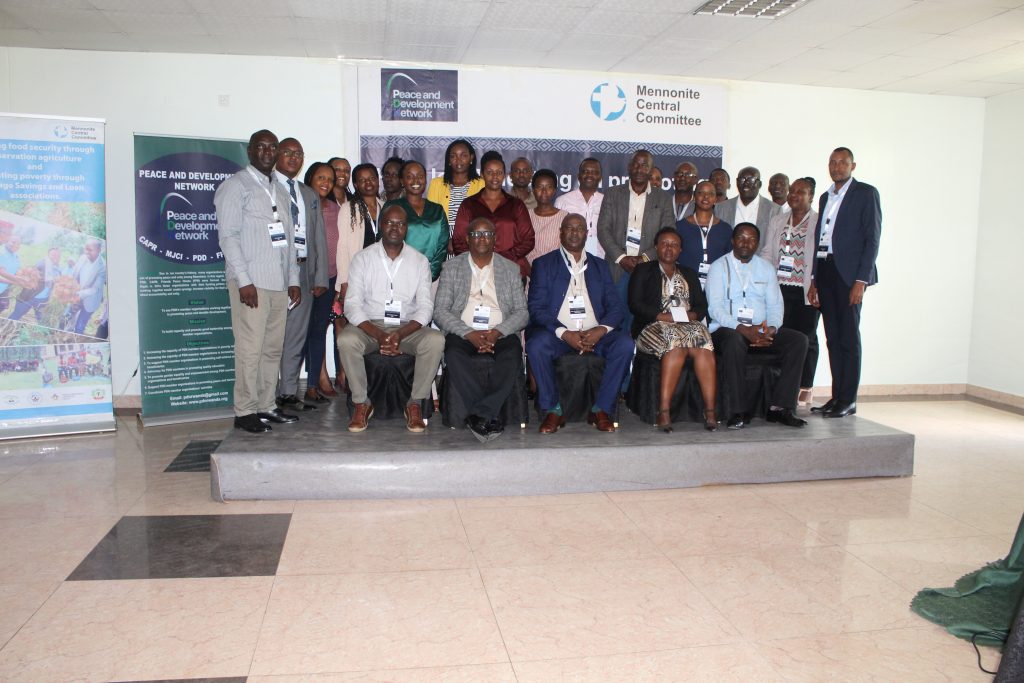
On December 10th, 2024, a significant milestone for Rwanda’s agricultural future took place at the Classic Hotel in Kicukiro, Kigali. The high-level meeting, organized by the Peace and Development Network (PDN) with technical and financial support from Mennonite Central Committee (MCC-Rwanda/Burundi), brought together over 30 experts and stakeholders from government and non-government institutions. These included representatives from MINAGRI, RAB, WFP, FAO, CIFOR-ICRAF, and many others. The objective was to explore ways to scale up Conservation Agriculture (CA) in Rwanda and enhance food security across the country.
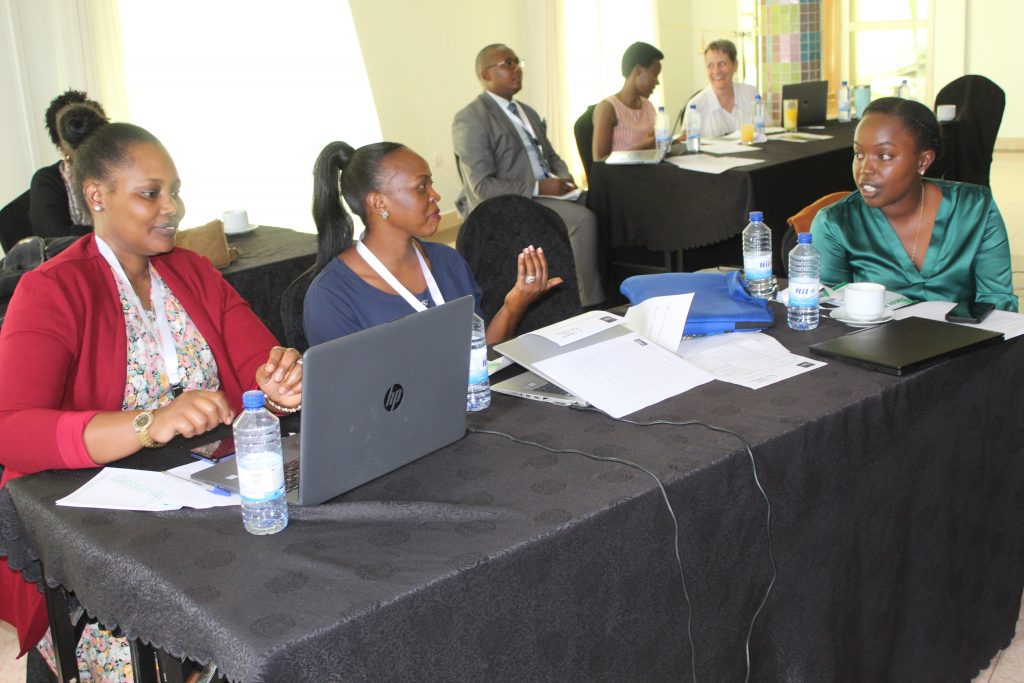
PDN’s Food Security through Conservation Agriculture Project has been running for years, benefiting thousands of Rwandan farmers. The project operates across five districts Bugesera, Burera, Gicumbi, Kayonza, and Ruhango and employs the Farmer Field School (FFS) method. The essence of the project is simple but powerful: “If farmers adopt CA+ techniques combined with access to Village Savings and Loan Associations (VSLAs), food security will improve.”
Over the years, PDN has trained Master Trainers, district agronomists, WFP staff, and other stakeholders in conservation agriculture, with 30-50% increases in crop yields reported by participants. Additionally, gender inclusivity is a priority, with 70% of direct participants being women. By promoting nutrition-sensitive agriculture, PDN has directly impacted over 10,636 farmers and reached a total of 31,850 household members.
During the meeting, participants discussed PDN’s approach and other key components of scaling up CA. Key highlights included:
- The CA+ Approach: This method incorporates minimum soil disturbance, permanent soil cover, crop diversification, and integrated pest management, among others. This holistic approach is essential for building resilient farming systems.
- Training Materials: PDN showcased the CA training manual and related materials developed by MCC/CFGB, including facilitators’ guidebooks, posters, and booklets. These resources have been adopted in several countries where MCC operates.
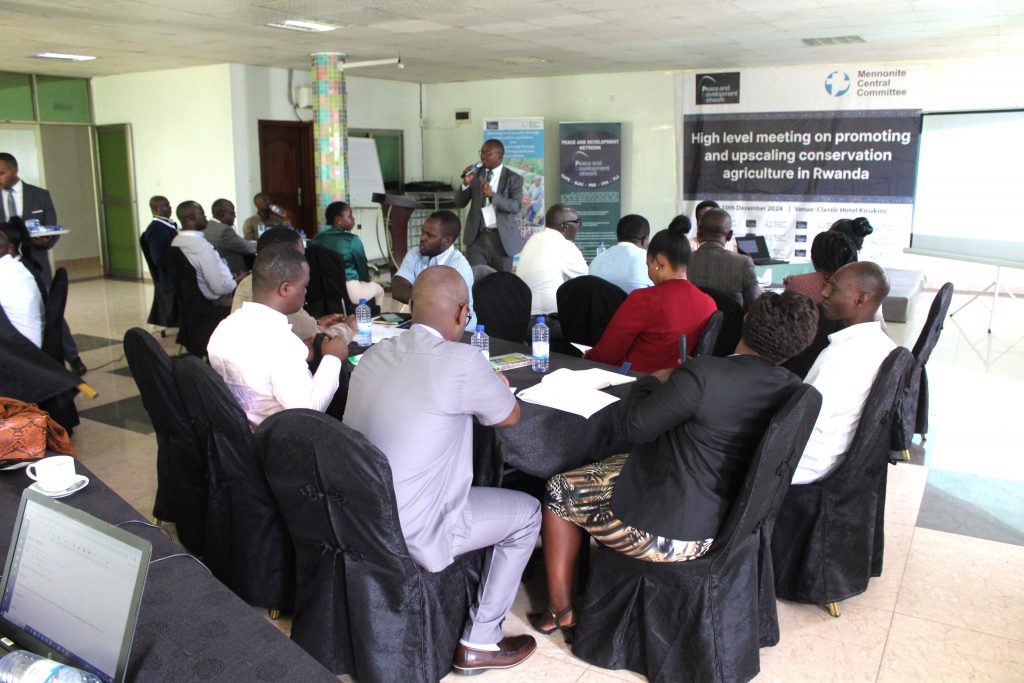
The meeting was structured around thought-provoking discussions, which led to some crucial recommendations:
- Coordination for CA Extension: It was agreed that MINAGRI should lead the coordination of CA activities. To formalize this, a Memorandum of Understanding (MoU) between NGOs and MINAGRI will be drafted to ensure smooth collaboration.
- Unified Terminology: A common understanding is crucial for the successful implementation of CA. Participants recommended the use of “Conservation Agriculture” as the primary term, with “CA+” encompassing key principles like soil fertility management and pest control. In Kinyarwanda, it will be translated as “Ubuhinzi Bubungabunga Ubutaka.”
- Extension Methodologies: A key approach for scaling up CA involves collaborating with local governments to identify participants and conducting thorough needs assessments.
- Strategic Partnerships: There was consensus on the need for stronger linkages between institutions, particularly through Public-Private-Academic Partnerships (PPAP), to accelerate the adoption of CA practices.
PDN has committed to following up with MINAGRI/RAB to solidify the collaboration and move forward with the MoU and the formal registration of the RCA coalition. Additionally, further discussions will be held with MINAGRI to present more details about the coalition’s goals and ensure its legal status.
The high-level meeting in December 2024 marked an important step in Rwanda’s agricultural development, with key stakeholders aligning on a common vision to scale up Conservation Agriculture for a sustainable and food-secure future. Together, these efforts will pave the way for more resilient farming communities across the country.